A San Diego Zoo trip is one of the longer runs a Southern California school will take in a year. From Long Beach the drive south sits at roughly 1.5 to 2 hours each way under normal traffic, and that distance changes what a class needs from its transportation. A bumpy bench seat that works for a quick run to a nearby museum is a long morning for a third grader once you add freeway miles, an early start, and a full day on their feet. That is why we put grade-level San Diego Zoo groups on a charter bus rather than a basic school bus.
This guide covers how we run a field trip bus rental to the San Diego Zoo and the Safari Park, where the buses park now that paid parking has arrived, the booking notice a long haul calls for, and how to scale coaches across a whole grade. When you have settled on a date and can estimate the group, reach our charter bus line at 562-259-8490 or get pricing for your group, and we will line the run up with you. We handle these long southbound school runs regularly, so the guidance here rests on actual road miles.
A Longer Haul to the San Diego Zoo
The San Diego Zoo sits in Balboa Park, and the Safari Park is out in the San Pasqual Valley near Escondido. Both run roughly 1.5 to 2 hours from Long Beach depending on the gate time and the morning I-5 or I-15 traffic. That is a real haul for a class of children, and it is the single fact that shapes everything else. An early gate means an early load, which usually means a departure before the worst of the freeway crush, and it means the children are on the bus for a meaningful stretch before they ever see an animal.
Both destinations run school programs through the same operator. The SoCal Field Trip Program covers schools in Los Angeles, Orange, Santa Barbara, Riverside, and Imperial counties, which puts most Long Beach area schools inside the eligible zone. Groups generally need a minimum of 15 students to book under the school rate, and the Safari Park caps its school programs around 150, so a very large grade may be split across program slots as well as across buses. We do not set those program rules, so confirm current eligibility and group minimums with the venue when you book your visit.
Balboa Park zoo with 3,500-plus animals across 100 acres. SoCal Field Trip Program for eligible school groups with a minimum around 15 students. Coach drop-off and bus parking on site, with paid parking in effect since January 2026.
2920 Zoo Drive, San Diego, CA 92101
sandiegozoo.org
Open-range wildlife park in the San Pasqual Valley near Escondido. School programs for groups from roughly 15 to 150 students. Large lots stage motorcoaches, with paid parking in effect since January 2026.
15500 San Pasqual Valley Road, Escondido, CA 92027
sdzsafaripark.org
Charter Parking at the Zoo and Safari Park
Parking is the part that changed most recently. Paid parking began at both the San Diego Zoo and the Safari Park in January 2026, and oversized vehicles such as a charter bus are charged at a higher rate, generally around $44 per visit. That fee is a venue charge rather than something we set, so we flag it during booking and you can plan it into the trip budget rather than meeting it as a surprise at the gate. Rates and lot rules can shift, so we reconfirm the current parking arrangement before the trip date rather than relying on last season’s setup.
On the day, the coach drops the group near the entrance, then moves to the assigned oversized lot for the visit. We coordinate the drop point and the return pickup time with the lead teacher so the bus is back at the curb when the grade is ready to leave, not idling on the clock all afternoon. The Safari Park sits farther out with its own large lots, so the drop and stage pattern there is a little roomier than the tighter Balboa Park approach.
Booking a Zoo Field Trip Bus Months Ahead
School field trips cluster in spring and again in the back-to-school weeks of fall, and that is when our calendar fills first. For a peak spring date, we encourage schools to book as soon as the trip clears, ideally the moment the venue confirms the program slot. A whole grade needs several coaches on the same morning, and those vehicles are the first to go on a busy weekday in May.
A short list of particulars lets us price and run the zoo day without a snag:
- A settled student total, along with teachers and chaperones, so the seating is matched right
- The school address, the confirmed gate time, and the planned return time
- How many separate coaches you expect for the grade
- Any second stop, such as a Balboa Park museum paired with the zoo
Chaperone ratios matter for the seat count too. Schools usually run a set number of adults per group of students, and those chaperones ride the bus alongside the class, so we fold them into the headcount when we size each coach rather than counting children alone.
Why a Coach Works Best for the Drive South
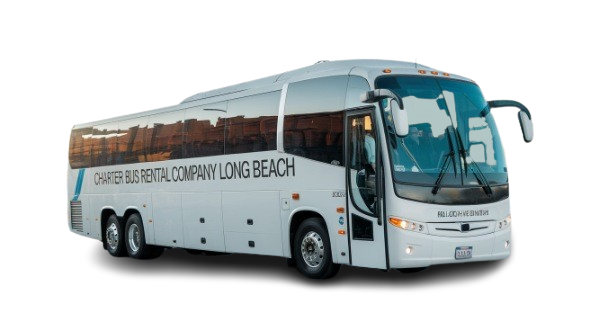
For a quick local trip a yellow school bus is fine. For a 1.5 to 2 hour ride each way, a 56 passenger charter bus earns its place. The biggest practical reason is the restroom on board, which removes the need for an unplanned freeway stop with a class of young students halfway down the I-5. Climate control is the next reason, since a coach holds a steady temperature on a hot inland afternoon rather than baking on the run home. Reclining seats and luggage bays for lunches, jackets, and project gear round it out, so the children arrive at the gate settled rather than worn out.
One coach seats 56, and the practical seated load is a little lower once you fold in teachers and chaperones, so a class plus its adults fits comfortably with room to spare. A whole grade does not fit on one vehicle, so we pair multiple coaches for the morning and keep each class together on its own bus. For schools comparing options, our 56 passenger charter bus page lays out the layout, and you can see how we handle the wider category on our student field trip bus service.
If your grade is heading somewhere closer instead, the same approach carries over to other school runs. We cover a Buena Park field trip bus for Knott’s Berry Farm science days, and an Aquarium of the Pacific field trip bus for the short hop downtown.
A Full Day Zoo Trip From Long Beach
A standard San Diego Zoo day tends to run like this when the grade departs from one Long Beach campus and the gate time is 10:00 AM:
- 7:30 AM, coaches load at the school and depart ahead of the heaviest traffic
- 9:45 AM, buses reach the zoo, drop the grade near the entrance, then stage in the oversized lot
- 2:30 PM, classes regroup at the meeting point and reload by coach
- 4:30 PM, the grade is back at the school after the southbound return
The exact clock shifts with the gate time and the season, but the shape holds. We hold each coach for the full visit and let the lead teacher call when the bus rolls, so a group needing ten extra minutes is not leaving the coach idling. On the long ride home, the restroom and climate control on the coach are what keep a tired grade comfortable through the last stretch of freeway.
On cost, a charter field trip is charged by the hour with a set hours minimum, and a long out-and-back like San Diego may be quoted by the day or by the mile instead, which can suit a single long run better than the clock. As a rough guide, a 50 to 56 passenger charter bus usually books $180 to $500+ hourly, rising to $1,800 to $3,800 over one full day, or $6.00 to $9.95 charged on each mile, and the date and the distance settle the final number. Our rate sheet maps out the full set, and for an exact figure on your trip, call 562-259-8490.
That long southbound logistics piece is the part most teachers are glad to hand off. You can give us the school, the gate time, and the headcount, and we will keep the grade on schedule while Charter Bus Rental Company Long Beach handles the long drive.